Evaluation: Advanced Portfolio
My project was Music Video production with promotional materials. I worked with Grace Rewaj and Fatima Adam. I contributed to all areas of the three tasks, but mainly I worked on the editing and the magazine advert, completing most of the editing, and all of the magazine advert.
Our target audience is 15-25 year olds, as this is the most common age for watching music videos. Our secondary audience was 25-35, as I think that this age group would also appreciate the product. Our products will appeal to our target audience because they are modern, bright and are made especially for this audience.
In what ways does your media product use, develop or challenge forms and conventions of real media products?
An example of an existing music video is Bat for Lashes- Daniel music video. This is a very creative music video with use of fast paced editing, iteresting lighting and unique dancing. This video, although of a similar genre to ours, is a complete contrast to the music video that we have produced. Although both contain the conventions of the genre( footage mainly of artist, more than one location, pace fitting with the song, a simple narrative and visuals complimenting the lyrics), they are both very different as finished products. The Bat for Lashes video, is much more creative, but is also a little quirky and strange. However this compliments their music well, and their brand image, which is a little strange. Below are some stills from the video, to illustrate the strange, yet creative and unique look:


Genre theories:
Andrew Goodwin, a media theorist has identified a number of key features in music videos, which are listed below:
A relationship between the lyrics and the visuals, with the visuals illustrating, amplifying or contradicting the lyrics.
A relationship between the music and the visuals, with the visuals illustrating, amplifying or contradicting the music.
Genre-related style and iconography present.
Multiple close-ups of the main artist or vocalist.
Voyeurism often plays a major part, especially in relation to females.
Intertextual references to other media texts may be present.
Our music video definitely follows the first point, our images are in sync with the song, and the lyrics are mimed. Also our footage is of a girl on her own, singing about missing someone, so this also establishes the relationship between the lyrics and the visuals. The music is of a slow tempo, and is acoustic, this is illustrated by bright visuals, that show an innocent character and are not too flashy, as to detract from the slow and steady pace of the song. Our music video also includes genre related style and iconography ( features the singer.songwriter, has different locations) see below for more. Our music video does not contain voyeurism or intertextual references.
An example of an existing music video is Bat for Lashes- Daniel music video. This is a very creative music video with use of fast paced editing, iteresting lighting and unique dancing. This video, although of a similar genre to ours, is a complete contrast to the music video that we have produced. Although both contain the conventions of the genre( footage mainly of artist, more than one location, pace fitting with the song, a simple narrative and visuals complimenting the lyrics), they are both very different as finished products. The Bat for Lashes video, is much more creative, but is also a little quirky and strange. However this compliments their music well, and their brand image, which is a little strange. Below are some stills from the video, to illustrate the strange, yet creative and unique look:


Genre theories:
Andrew Goodwin, a media theorist has identified a number of key features in music videos, which are listed below:
A relationship between the lyrics and the visuals, with the visuals illustrating, amplifying or contradicting the lyrics.
A relationship between the music and the visuals, with the visuals illustrating, amplifying or contradicting the music.
Genre-related style and iconography present.
Multiple close-ups of the main artist or vocalist.
Voyeurism often plays a major part, especially in relation to females.
Intertextual references to other media texts may be present.
Our music video definitely follows the first point, our images are in sync with the song, and the lyrics are mimed. Also our footage is of a girl on her own, singing about missing someone, so this also establishes the relationship between the lyrics and the visuals. The music is of a slow tempo, and is acoustic, this is illustrated by bright visuals, that show an innocent character and are not too flashy, as to detract from the slow and steady pace of the song. Our music video also includes genre related style and iconography ( features the singer.songwriter, has different locations) see below for more. Our music video does not contain voyeurism or intertextual references.
The music video genre consists of many things such as: short storylines, interesting editing and effects, unique camera shots, lots of footage of the artist(s) and instruments, where applicable. Also, music videos are usually fast paced, to keep the audience's interest and do not contain complicated storylines, as they only last for 3-5 minutes and so there is no time for development of a story. Within the music video genre there are many subgenres: rock, indie, singer-songwriter, hip hop, dance, pop and many more.The genre of our music video and promotional materials is female singer/songwriter. The conventions of this genre are: a focus on the singer/songwriter with most of the shots in the video being of the singer, although these videos sometimes have a narrative accompanying the singing shots. Of these conventions, we have used lots of shots of the singer/songwriter, and we have used two locations to add interest to this, a snowy scene in the woods, and a photo frame scene. We chose not to use a narrative in our video, but we have added photos of a couple together ( the singer and a male ) to illustrate the song. This also fits nicely with the photo frame shot, and continues the photograph element throughout the video. We added this new element, the photo frame, as it is very different from anything I have seen in a music video before, and it will hopefully interest the audience, and me a memorable feature from the video. Also, by doing something different, and challenging the conventions of
the genre, we are keeping the audience interested, and offering them ‘the same but different’ (G. Burton). I think our innovations were likely to prove successful because they are very different to existing music videos, but they are not too different as to disconnect our products from the genre. Our Ancillary tasks, the magazine advert and the CD cover, followed the conventions of the genre rather strictly, and are not as adventurous as the video. However, I feel that they do not need to be too different, and the photo frame shot, the different element, would not have made a good advert or CD cover. Our choices here worked effectively for our audiences, as they found these elements interesting, although some people disliked the photo frame idea, claiming it was ‘a bit random’, on the whole, our products were well liked. I feel that our products were different enough, but not too much as to displease the audience. In comparison to other music videos, our video is sucessful. However, it is not quite as interesting as some videos and lacks further interesting editing techniques, but these would have been very difficult to achieve without professional knowledge and experience, for example the kaleidoscope effect in Little Boots video for Remedy.
Stills from existing music videos:

 Stills from various genres of music videos
How effective is the combination of your main products and ancillary texts?
Our brand image is a fresh, elegant, clean look that is bright and professional. The brand image for Erica Shine, the singer/songwriter, is innocent, young and slightly naive.
Our logo is simple and elegant. It is simply the name, Erica Shine, in the font, Renaissance, it looks elegant, and fits well with our brand image. It fits our brand image because it is simple, but looks professional. Also, it is not a cluttered logo, like some, which helps to keep with the fresh, young and innocent parts of the brand image.
We have maintained a brand image across our products, we have used the same font, Renaissance, throughout, and have stuck to the colours of red, white and black for our ancillary tasks and bright colours in our music video. We have also kept the mise en scene in the images simple, so as to not detract from the artist, and so that the artist stands out more and the photos do not look too 'busy'. We have colour graded our video and photographs so that they look bright and clean, and this also helps to maintain the brand image. By using the same colours, fonts and image editing, across the texts, we have maintained a brand image, and all our products look as though they go together, which was the intended outcome.
The kind of media institution that might distribute our media product would be a company like EMI. This company has a wide range of genres and artists on its label, and so would probably distribute our products. Also, EMI is a professional company, which produces and distributes polished products, which are usually of a high standard. Therefore, I think that they would be a good company to distribute Erica Shine.

This is our logo
Quotes on Brand image:
'Brands need to provide customers with a consistent compelling experience in order not to confuse them, as confusion leads to doubt'
(Taken from mudvalley.com)
'Brands work because they offer us a form of guarantee, a set of ready made values attached to a product that we too can adopt upon purchase.'
(Taken from mediaknowall.com)
An example of a real brand image:
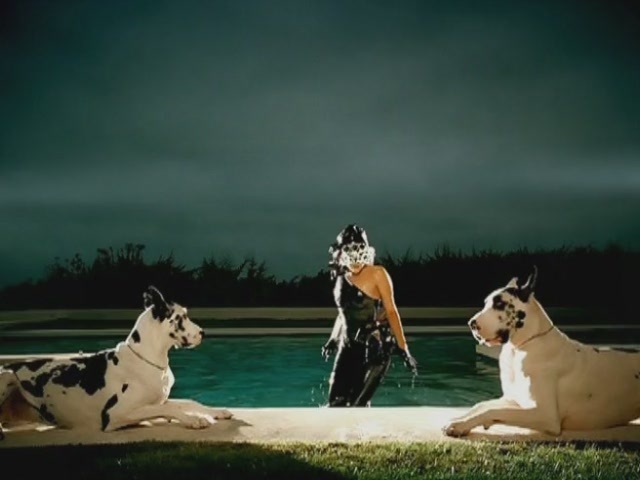
Lady Gaga
Lady Gaga's brand image is: strange, quirky, eccentric, but also fun, sparkly, confident and very unique. Below are album covers and shots from her music videos which demonstrate this:



What have you learned from your Audience feedback?
Here are some samle answers from the Audience feedback questionnaire:
 Do you think the product is typical of a music video?
• Yes
• Yes
• No
• Yes
• Yes
Pie chart to illustrate this question shows that 80% answered yes, and 20% answered no.
Does anything make it different or does it stand out from the typical? How?
• It stands out from the typical because of the photo frame.
• It is different because the snow effect and photo frame is very rare
• The pace is typical and it works well with the song, but the photo frame isn’t it stands out than the rest
• The snow effect makes it different
• The photo frame makes it different because it isn’t common to find that in music videos.
Does it work?
• Yes because it tells a story within the video.
• Yes
• Yes
• Yes
• No.
Name two interesting elements from the video?
• The flashbacks, the snow effect
• Flashbacks, Frame
• Frame, Location
• Flashbacks, Location
• Flashbacks, Location
Do you think the video fits well with the song?
• Yes
• Yes
• No
• Yes
• Yes
Do you think the pace of the video is typical of this kind of product?
• Yes. Because it is a slow song the slow pace works well with it
• I think the pace of the video is typical of this kind of product as they are both slow
• I think the pace of the video could have been a bit quicker however I do feel that everything else in the video fit well together
• Because the song is slow the pace of the video works well with it
• Yes the pace works well together
How do you think the video can be improved?
•I think it all fits well and no improvement is needed
•More scene variation
•Overall I think it was a great product
•Overall it worked well together
•Less of the frame scene

Here are some samle answers from the Audience feedback questionnaire:

• Yes
• Yes
• No
• Yes
• Yes
Pie chart to illustrate this question shows that 80% answered yes, and 20% answered no.
Does anything make it different or does it stand out from the typical? How?
• It stands out from the typical because of the photo frame.
• It is different because the snow effect and photo frame is very rare
• The pace is typical and it works well with the song, but the photo frame isn’t it stands out than the rest
• The snow effect makes it different
• The photo frame makes it different because it isn’t common to find that in music videos.
Does it work?
• Yes because it tells a story within the video.
• Yes
• Yes
• Yes
• No.
Name two interesting elements from the video?
• The flashbacks, the snow effect
• Flashbacks, Frame
• Frame, Location
• Flashbacks, Location
• Flashbacks, Location
Do you think the video fits well with the song?
• Yes
• Yes
• No
• Yes
• Yes
Do you think the pace of the video is typical of this kind of product?
• Yes. Because it is a slow song the slow pace works well with it
• I think the pace of the video is typical of this kind of product as they are both slow
• I think the pace of the video could have been a bit quicker however I do feel that everything else in the video fit well together
• Because the song is slow the pace of the video works well with it
• Yes the pace works well together
How do you think the video can be improved?
•I think it all fits well and no improvement is needed
•More scene variation
•Overall I think it was a great product
•Overall it worked well together
•Less of the frame scene
Do you think the product are typical of magazines and album covers/if so in what ways is it similar?
- Yes because it is simple like the artist
- Yes because the content is the same as what you would get on a normal album or magazine
- It is typical
Does anything make it different or does it stand out from the typical?How?
- Yes. The font is very elegant
- The colour scheme is not typical according to the artist in this video as the front cover is dark
- Yes.The front cover shows that the artist is the main focus
Does it work?
- Yes
- Yes
- Yes
Name two interesting elements from the ancillary tasks?
- The colour scheme and font
- The pictures and font
- The layout and Pictures
- Yes. More colour
- No
- No
Can you sum up the brand image of this album in one word?
- Elegant
- Stylish
- Graceful
Do you think the album cover fits in with the brand image of the video?
- Yes
- Yes
- No
Would you be tempted to buy this album?

- Yes
- Yes
- Yes
Pie chart to show results of this question 90% answered yes, 10% answered no.
Our target audience was 15-25 year olds, predominantly females. This is the main audience for female singer/songwriters, and so that was the audience we felt best suited our ideas for the products. They are also a loyal niche audience, which would help the product to be well received. This target audience is also right for our products financially because this age group spends more on music products than any other age group.
Our target audience was 15-25 year olds, predominantly females. This is the main audience for female singer/songwriters, and so that was the audience we felt best suited our ideas for the products. They are also a loyal niche audience, which would help the product to be well received. This target audience is also right for our products financially because this age group spends more on music products than any other age group.
We have two secondary audiences, one is 15-25 year old males, and the other is 25-35 males and females. Both of these secondary target audiences would also probably appreciate our product, as with similar artists to Erica Shine ,such as Taylor Swift and Alicia Keys, the products have the potential to be equally appreciated by these secondary audiences, as they do with the initial target audience.
We used audience feedback for our research, and for our evaluation processes. We handed out questionnaires for this, and collected in the results. For research, we used the information to make decisions about our products, and for evaluating, we used the information to analyse the success of our products.
The technologies we used for audience feedback, is word processing to create questionnaires, and a video camera to film people giving feedback about our products.
We tried to attract our audience by sticking to the conventions of the singer/songwriter genre, and on the whole this worked.
From our audience feedback, I have learned that sometimes, unique ideas are not appreciated by everyone. For example, an individual didn’t like the photo frame idea in the video, and said it was ‘random and stupid’, however, on the whole, this element was received well, with another individual saying ‘it (the photo frame) looks really good, I think it works well’. However, I learnt that what appeals to some of the target audience, doesn’t appeal to all of them, so it is difficult to suit all.
Reflecting back on this feedback, If I was to create the media products again, I would perhaps add a storyline to the video, use more colour grading and effects and create more interesting effects for the photographs in the video, used as flashbacks. For the ancillary tasks, I would make the CD cover more colourful, and would alter the magazine advert slightly to make it more eye catching, perhaps by adding more colour or by using bolder fonts.
How did you use media technologies in the construction, research, planning and evaluation stages?
Research
For the research, we used the internet to gather information about existing products, and to view existing music videos on youtube.com, and to look at album covers through Google, image search. We also used blogger.com to post our research, and present it as a blog. In addition I used Microsoft word to create the questionnaires.


Above: existing Album covers

 Blogger and youtube logos
Planning
For the planning, we sketched ideas for the storyboard, and ancillary tasks by hand. From this we then used a video camera on a tripod, and imovie to create an animatic storyboard, which we then uploaded onto the blog. We filmed each hand drawn image for a few seconds, and then put this into imovie, cut some of the shots down, deleted unnecessary footage and sound, and then uploaded this to our blog. In order to post the song onto the blog, we also had to use imovie, to create a blank screen with the title of the song, which we did by creating a title page, and then we simply added the song, and uploaded this video to our blog.
Construction
For the construction we used two cameras: a digital stills camera, and a digital video camera. We used both of these cameras for our main project, the video, the stills camera for the flashback photographs and the video camera to shoot the rest. We also used the stills camera for our ancillary tasks. The other hardware we used was an Apple Imac, which I am very familiar with. The software we used to create our products was Final Cut Express, Adobe Photoshop, and Adobe In Design. Two of these programs I was already able to use and quite confident with, as I used them for my AS coursework (Photoshop and In Design). However, Final Cut Express was completely new to me, and took me a while to get to know how to use it. But as we progressed through the construction stage, I learnt more about the software, and how to use it better. For example I learnt how to combine two independent video tracks, to create the photo frame element of the video. To do this, I re-sized the video with the miming in, and placed it inside the photo frame, and then I also desaturated both videos, and used the colour corrector video filters menu to add colour grading to the photo. I used the various controls (blacks, whites, hue, saturation) to make the image look much sharper, which enhanced the overall look. I also added colour grading, again by using the controls in the colour editing screen to enhance the rest of the video. For the photographs, I used the desaturate tool again, so that these linked in well with the photo frame. Some of these also required additional colour grading, which was added in the same way as before. To make the album advertisement, I used Photoshop. I cut out the image of Grace using the pen tool, and creating a separate layer so that I could separate her from the original background. I then used the hue and saturation tools to brighten up the image, and then I used the lightness/darkness tools, and the contrast to sharpen the image. I fiddled around with these until I was happy with the image, once happy, I placed the image into InDesign using file, place, and using the downloaded font, I added the text. To get the correct red colour, I used the colour picker tool, and clicked on the red in the image, to ensure that I had the same colour. I then took the finished album cover and placed this into InDesgin in the same way as before. Once all the information and images were there, I tried many different layouts to see which looked best before choosing the final layout.
We used dafont.com to download a font for our ancillary tasks, called Renaissance. I decided to use this downloaded font instead of the basic fonts such as Times New Roman, as I felt it suited the brand image better, and enhanced the products. We also used the internet to download our song. We used a website of free, uncopyrighted music, and searched through lots of tracks before choosing our final song. Another website we have used is blogger.com, we have used this to post all our resarch, planning, sample photographs, test shoot photographs and all our rough sketches. This has been useful as it has been easy to keep track of our progress in an ordered way, and by doing this online, no information, drawings or images have been lost.
Final Cut Express proved to be a little challenging at times, as I was unsure how to use a lot of the tools at first, and I found it very annoying that footage had to be ‘rendered’ every time you edited bits of it, this slowed down the work process and proved to be very irritating. However, this software didn’t limit creativity, in fact it was the opposite, for example, the colour grading and the photo frame creation discussed earlier would not have been possible on iMovie and other, simpler packages.
Images of the various software:

 Above: Final Cut Express editing screen and software package


Images of the various software:


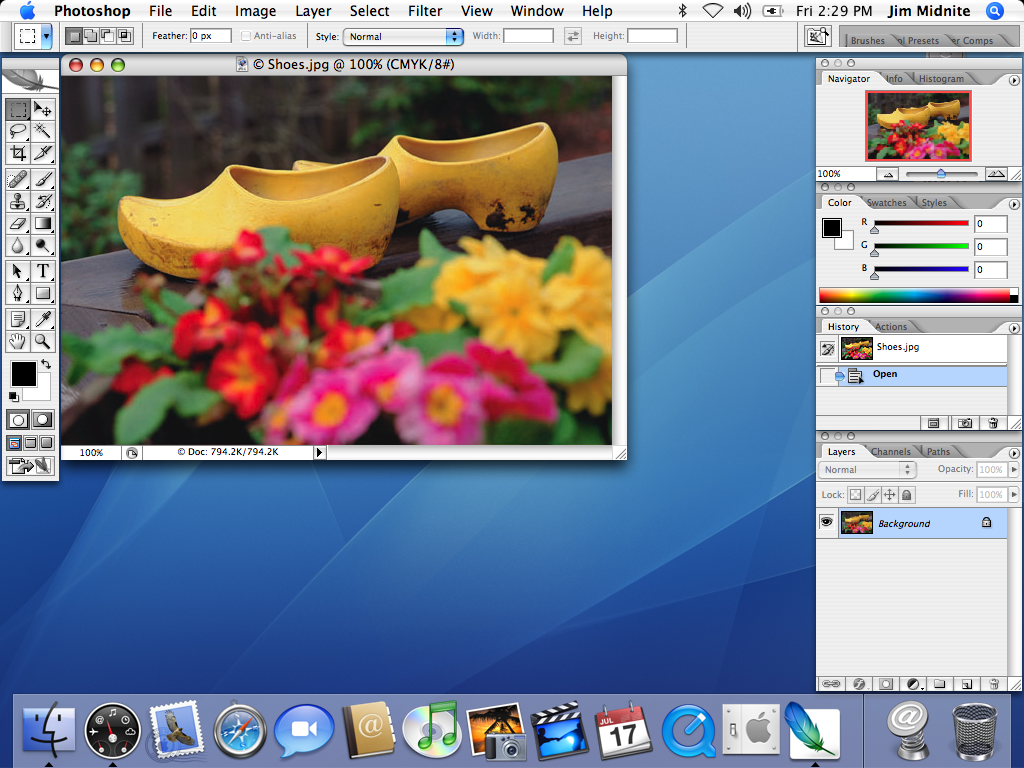

Above: An example editing screen in Adobe Photoshop and the software package


Above: Adobe In Design, example editing screen and Software package.

This is the photo frame element discussed above.

This is an example of the colour grading
in the video. As you can see, the image is bright and sharp.

This is one of the flashback images, which has been colour graded by using 'Desaturate' and then some brightness and contrast alterations.
A few more stills from our music video:


Finished Products:


Summary
Overall, I feel that our projects have turned out well, and the software we have used has been very useful in developing creativity and enhancing our products. I also think that we have succeeded in creating brand image, and sustaining it throughout all our products.From the AS Foundation Portfolio, my skills have developed and I have been able to produce much more professional results for my A2 Advanced Portfolio.
3365

0 comments:
Post a Comment